PAST PROJECT
 ← Back
PAST PROJECT
The Project: Build a fuckin' snowboard
Technical documentation for building a custom all-mountain snowboard using sustainable materials, innovative construction methods, and snowboard-specific engineering principles. Covers material selection, CNC fabrication, graphics application, and the complete R&D process.
This project focuses on developing a high-performance all-mountain snowboard through thoughtful design optimization, advanced material selection, and precision manufacturing techniques. Through extensive research and development, a refined construction approach was implemented utilizing high-performance materials including lightweight Paulownia wood cores, bamboo sidewalls, and advanced composite systems. The resulting design demonstrates how careful attention to geometry, material properties, and construction methods can produce exceptional snowboard performance.
For many years, snowboard design suffered from a fundamental misconception in the industry. Numerous manufacturers approached snowboard construction by simply widening ski designs, applying ski-based engineering principles to a fundamentally different application. While not universal, this practice was widespread throughout the industry.
Skis and snowboards operate under fundamentally different biomechanical principles and force distributions. Effective snowboard design requires recognition of these differences and application of snowboard-specific engineering approaches rather than adapted ski methodologies.
The scope of this project encompassed:
Extensive research and development was conducted across multiple design iterations, exploring various approaches to:
The prototype phase served as the primary vehicle for testing and refining design concepts. Multiple iterations allowed for systematic evaluation of:
Areas that were constantly under experimentation were:
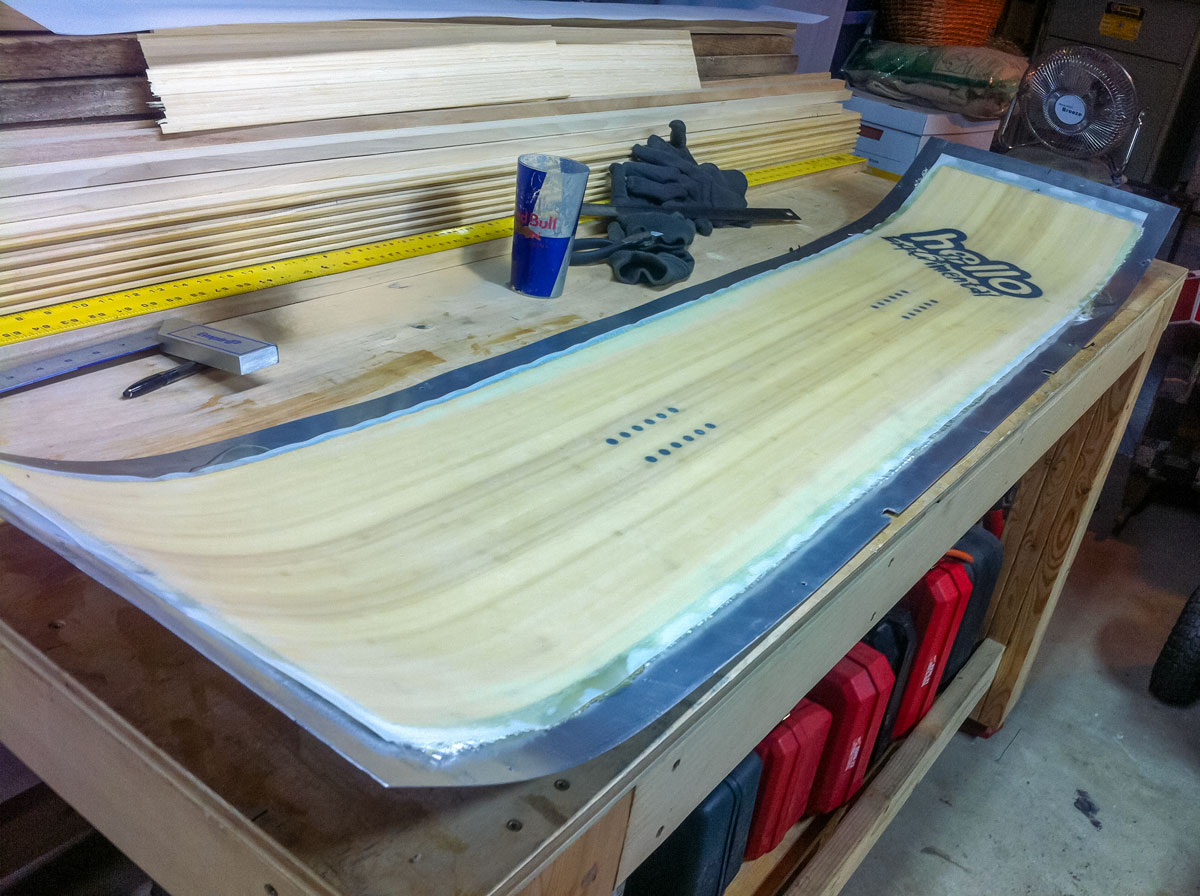
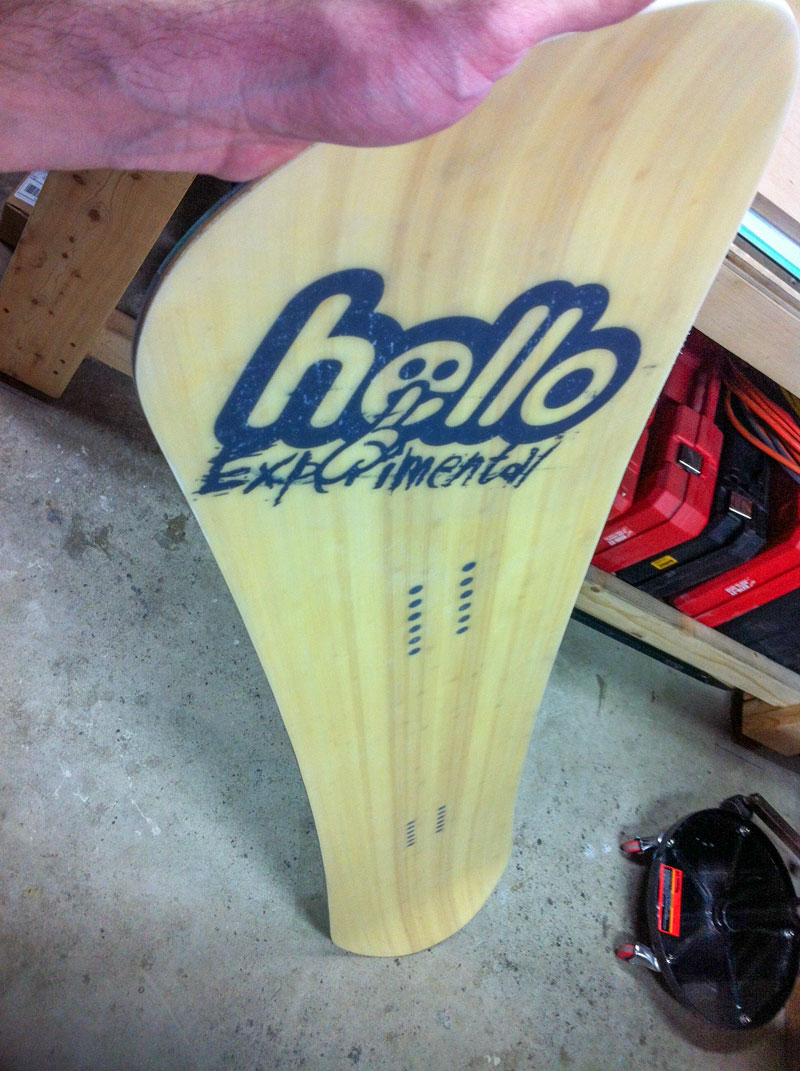
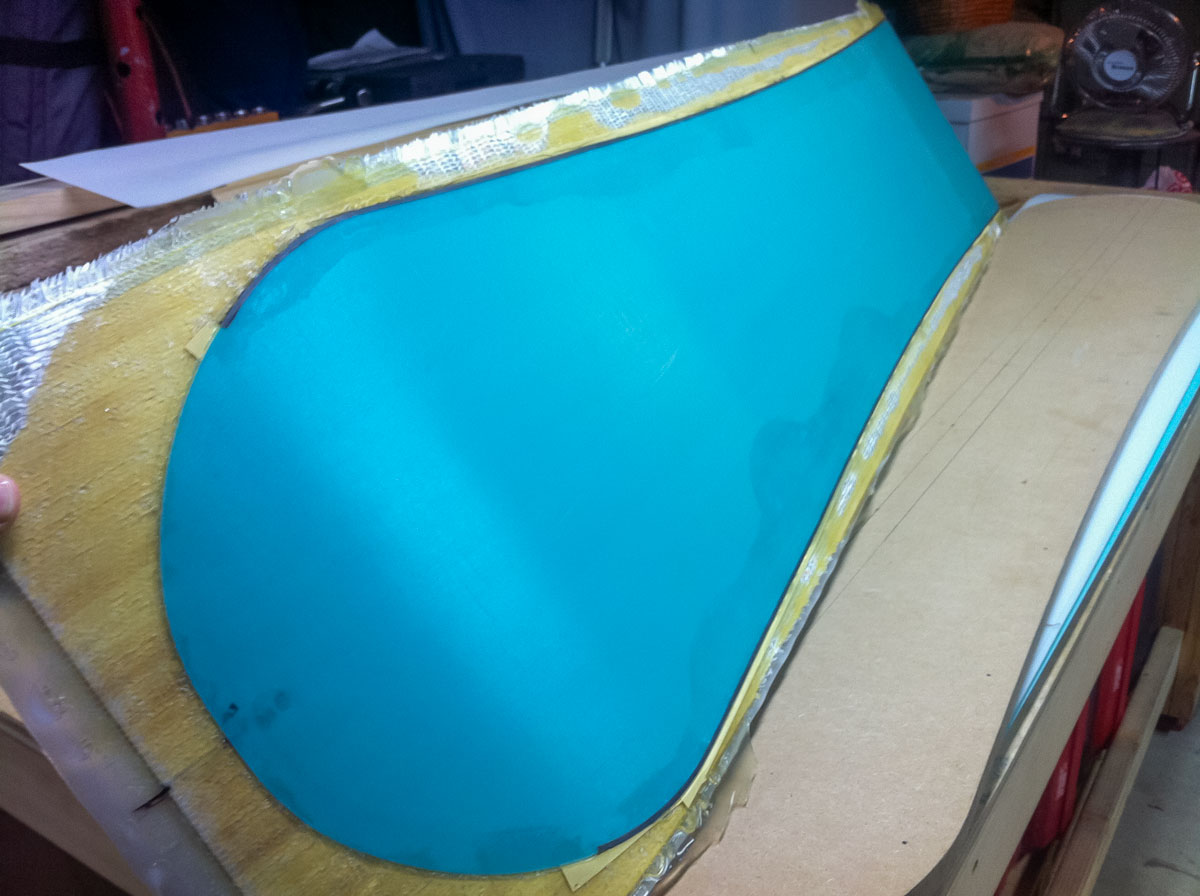
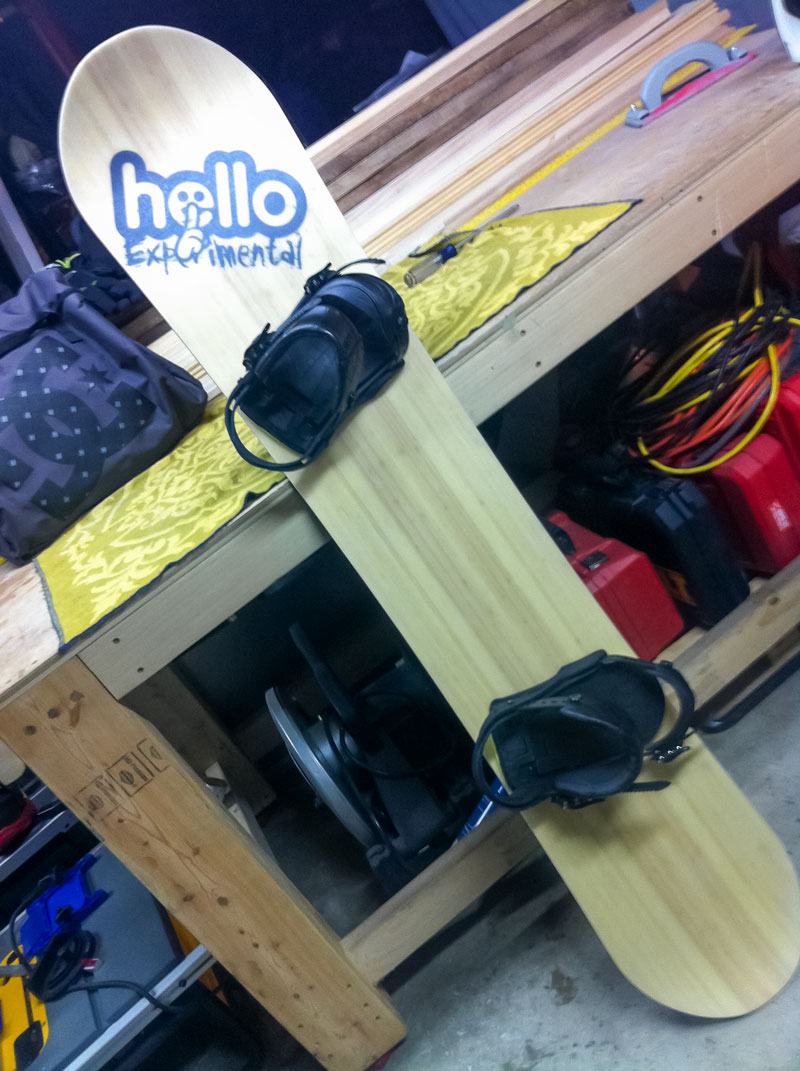
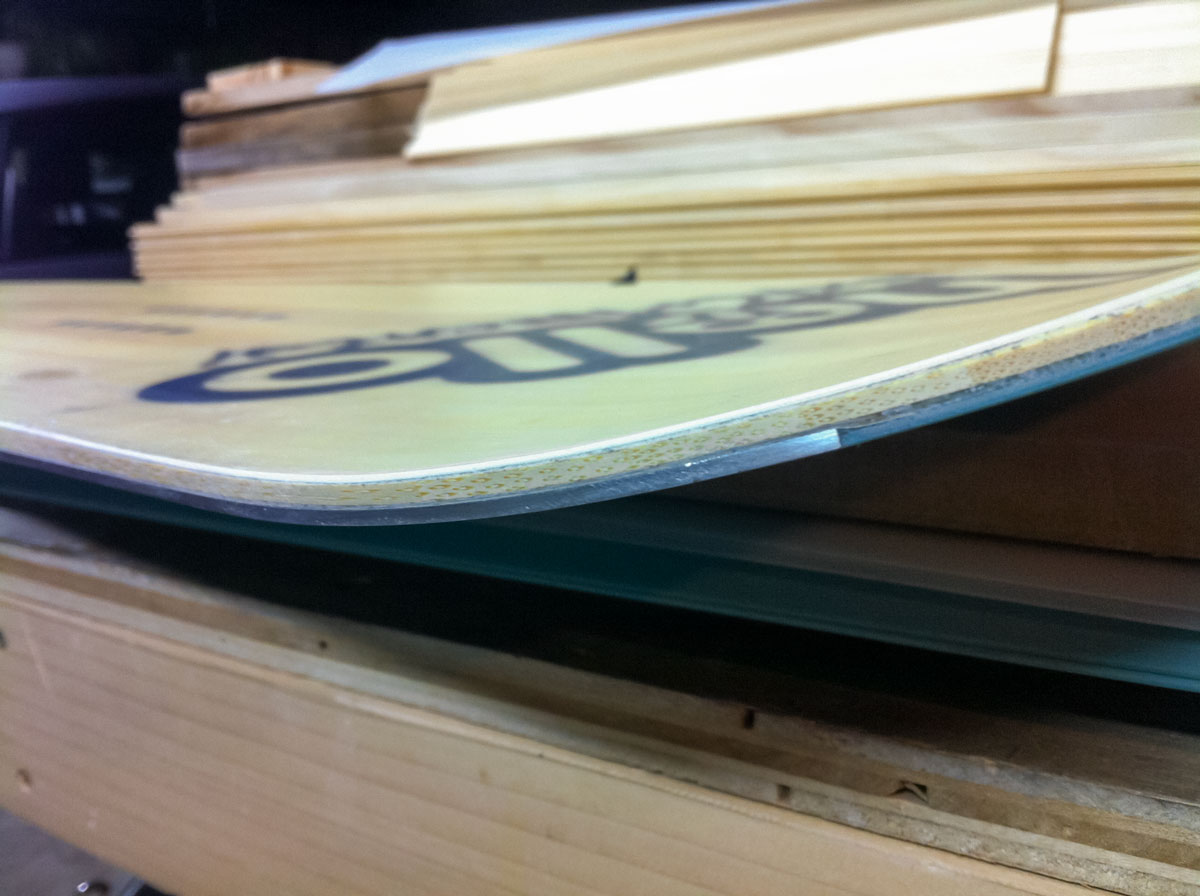
The first board popped out of the press and exceeded expectations. The bamboo core was great for soaking up bumps and ruts. It also carved groomers like it was on rails. It was easy to layup too and that was good for production, but overall the board was too heavy, you really noticed it hanging on your foot while stuck on the lift. It also lacked any kind of pop in its flex in it's buttery flex pattern.

Core material selection prioritized three key factors:

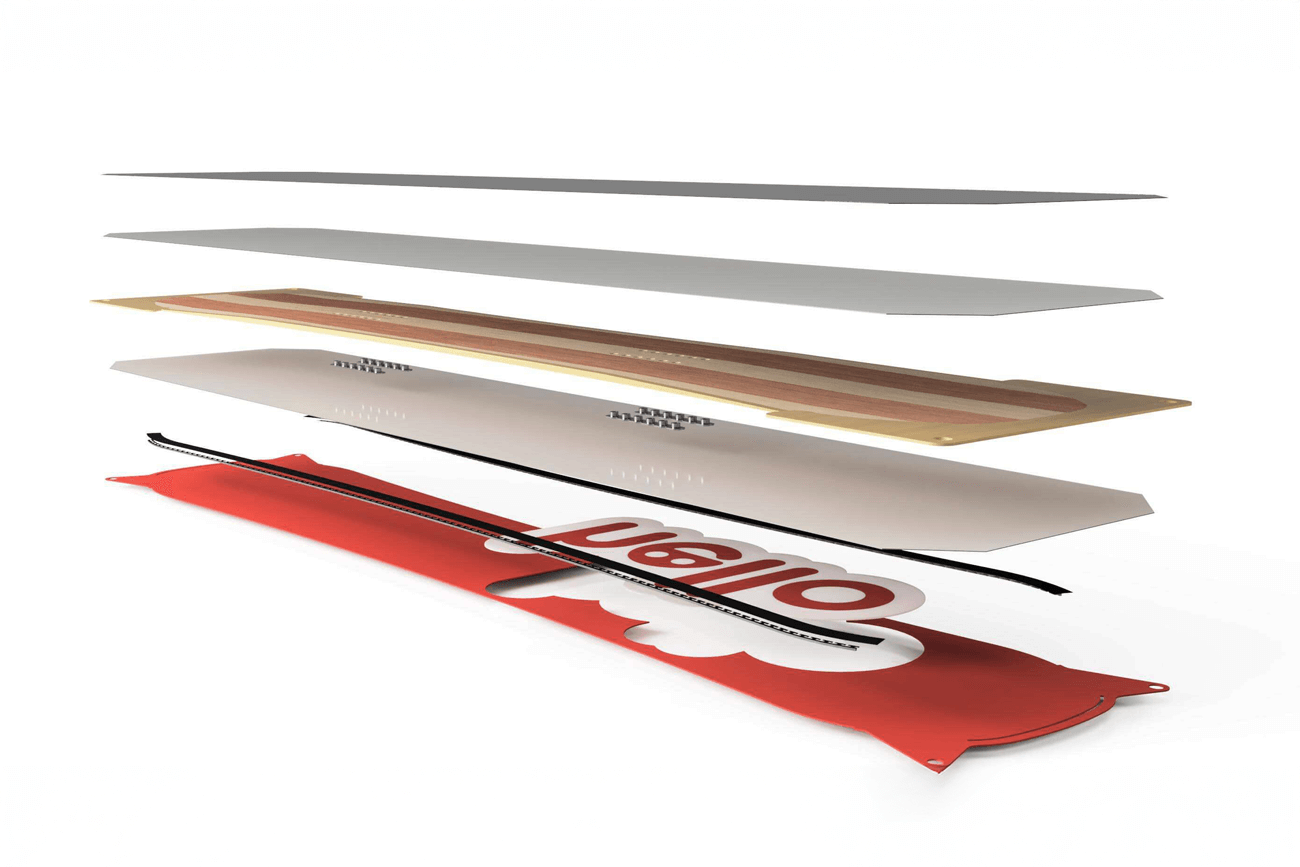
A hybrid core construction was developed utilizing:
Poplar Wood
Paulownia Wood
Crown Plastics was selected for both base and topsheet applications based on:
The design deliberately diverged from the industry-standard practice of plastic sidewalls, implementing an innovative alternative material.
Bamboo was selected as the sidewall material, representing a significant departure from conventional construction:
Superior strength characteristics in sidewall applications
Vectroply E TLX 1900 Triaxial Fiberglass was specified for structural reinforcement:
Entropy Resins CPM bio-based epoxy system was selected to maintain environmental objectives:
Board geometry underwent iterative refinement throughout the R&D phase, addressing:
Manufacturing processes were developed and refined to ensure:
Lamination procedures were systematically optimized for:
A custom CNC router was constructed utilizing components from AvidCNC to provide precision machining capabilities essential to consistent board production.
System Applications:
Component Source: avidcnc.com
Base material cutting was accomplished using the custom CNC router equipped with a Donek drag knife system.
Donek Drag Knife Advantages:
Component Source: donek.com
The CNC machining capability proved essential to the project's success by:
The investment in custom CNC infrastructure provided manufacturing capabilities typically reserved for larger production facilities, demonstrating that precision board building is achievable at smaller scales with appropriate tooling.
The aesthetic design strategy emphasized the natural beauty of the wood core construction. By utilizing a clear topsheet material, the visual character of the Poplar and Paulownia core remains visible, creating a distinctive organic appearance that celebrates the board's construction rather than concealing it.
Epoxy-Based Screen Printing Ink was selected as the primary graphics application method:
Process Characteristics:
Design Philosophy: The single-color approach complements rather than dominates the natural wood aesthetic, allowing the core's visual characteristics to remain the primary design element while adding branded or decorative elements where desired.
Dye sublimation represents a high-volume production approach offering:
Advantages:
Implementation Barriers:
Project Decision: While dye sublimation offers aesthetic versatility, the capital requirements and engineering complexity exceeded the project's resource allocation and immediate production needs.
An innovative, cost-effective graphics method adapted from surfboard manufacturing:
Process Overview:
Method Advantages:
Technical Considerations:
Application Suitability: This method provides an accessible entry point for custom graphics and small-batch production, offering professional results without the capital investment required for dye sublimation systems.
| Method | Cost | Complexity | Color Options | Visual Result | Best For |
|---|---|---|---|---|---|
| Epoxy Screen Print | Low | Low | Single color | Clean, minimal | Emphasizing natural core visibility |
| Dye Sublimation | High | High | Full color | Professional, photographic | High-volume production |
| Rice Paper Inkjet | Very Low | Low | Full color | Custom, detailed | Custom builds, small batches |
The R&D process successfully yielded a refined snowboard design incorporating:
The selected material combination demonstrated:
Developed pressing and lay-up methods proved:
The project successfully demonstrated that snowboard-specific design approaches yield superior results compared to adapted ski construction methods. By recognizing the fundamental differences in how these platforms function, the design achieved performance characteristics optimized for snowboarding biomechanics.
The use of bamboo as a sidewall material represents a significant innovation delivering superior performance:
Technical Merit: The superior bonding strength and mechanical properties of bamboo validate its use based purely on performance considerations. This material choice delivers genuine structural advantages over conventional plastic sidewalls.
Industry Implications: This successful application challenges the default use of plastic sidewalls and demonstrates that alternative materials can offer superior performance characteristics.
The project achieved its material performance objectives through:
Critically, these material choices delivered superior performance characteristics, demonstrating that innovative material selection and thoughtful engineering produce exceptional results.
The incorporation of Paulownia wood core sections successfully reduced board weight while maintaining structural requirements for all-mountain performance. This weight reduction enhances:
The project successfully identified and evaluated multiple graphics application methods, each serving different production scenarios:
Epoxy Screen Printing proved ideal for the project's aesthetic philosophy, allowing the natural core beauty to remain the dominant visual element while providing branding capability.
Rice Paper Inkjet Transfer emerged as a valuable discovery, offering a low-barrier entry to custom graphics that democratizes access to professional-looking results without significant capital investment. This method's adaptation from surfboard manufacturing demonstrates the value of cross-industry innovation.
Dye Sublimation remains a future consideration for scaled production, with its capital requirements and complexity acknowledged but deferred pending production volume justification.
This multi-method approach provides flexibility across different production scales and customer requirements, from one-off custom builds to potential production runs.
This project successfully developed a high-performance all-mountain snowboard that challenges conventional industry approaches on multiple fronts. By rejecting the historical practice of adapting ski design principles to snowboard construction, the design achieves performance characteristics specifically optimized for snowboarding biomechanics.
The extensive R&D process yielded refined solutions across all design aspects: geometry, material selection, and manufacturing processes. The resulting snowboard demonstrates that environmental responsibility and lightweight construction can be achieved without compromising performance when approached through thoughtful engineering and material science.
The innovative use of FSC-certified bamboo sidewalls, combined with Paulownia core sections and bio-based resin systems, establishes a template for sustainable snowboard construction that delivers genuine performance advantages. The developed manufacturing processes ensure these design innovations can be consistently reproduced, supporting both custom builds and potential scaled production.
| Component | Material/Specification | Key Characteristics | Manufacturer |
|---|---|---|---|
| Core Material (Primary) | Poplar | Structural strength, traditional flex | — |
| Core Material (Secondary) | Paulownia | Lightweight, exceptional strength-to-weight ratio | — |
| Sidewalls | Bamboo | Superior bonding, high strength, natural aesthetic | — |
| Steel Edges | Steel | Precision edge hold and durability | waelzholz.com |
| Base Material | Crown Plastics | Industry-standard durability | crownplastics.com |
| Topsheet Material | Crown Plastics | Proven performance characteristics | crownplastics.com |
| Reinforcement | Vectorply E TLX 1900 Triaxial Fiberglass | Multidirectional strength, optimized torsion | vectorply.com |
| Resin System | Entropy Resins | High-performance epoxy, superior bond strength | entropyresins.com |
| Design Category | All-Mountain | Versatile performance across conditions | — |
| Design Philosophy | Iterative design refinement | Optimized through extensive R&D and testing | — |
| CNC Router System | Custom-built with AvidCNC components | Core cutting, shaping, precision fabrication | avidcnc.com |
| Base Cutting Tool | Donek Drag Knife | Precise base material cutting on CNC | donek.com |
| Graphics Method (Selected) | Epoxy Screen Printing Ink | Single-color, preserves core visibility | — |
| Graphics Method (Alternative 1) | Dye Sublimation | Full-color, high-volume capability | — |
| Graphics Method (Alternative 2) | Rice Paper Inkjet Transfer | Full-color, low-cost custom graphics | — |
STAY UP TO DATE
Thanks — you're on the list.